# Pure-Tone Audiometry Testing: Pure-Tone Audiometer
> Pure-Tone Audiometry is the gold standard in testing the severity and etiology of hearing loss. Also see our Pure-Tone Audiometer testing unit.
What is Pure-Tone Audiometry
# **Pure-Tone Audiometry:** Determine The Nature and Severity of Hearing Loss
Pure-Tone Audiometry is a behavioral test used to measure hearing sensitivity and the basis of nearly all audiological services and is the gold standard in determining the severity and etiology of hearing loss. Audiologists obtain this valuable diagnostic information by using a variety of transducers and stimuli. These results are paramount for providing the highest level of hearing healthcare.
## Experience our **New Audiometer** & Fitting Unit
pure-tone-audiometry
## **Why** Use Pure-Tone Audiometry?
## Gold standard
Since its inception in 1909, pure tone audiometry has been considered the “gold standard” test in diagnosing hearing loss. This method has been extensively studied and perfected as technology improves. Once an audiologist is trained, it is a relatively simple method to determine the nature or type of hearing loss an individual is presenting with, as well as the severity of that loss. These results then guide patient care through an individual’s hearing loss journey.

## Test older children and adults
Pure Tone Audiometry is a test used across the lifespan; from young children to the elderly. The basis of testing remains the same – pure tones or beeps are presented and an individual responds in a developmentally appropriate way. Patients may simply raise their hand when a tone is heard, for example when testing older children and adults, turn their head to an interesting toy or video, such as when testing infants, or perform a play-based task, which is useful with children.
## **How** To Perform Pure-Tone Audiometry?
When a patient arrives, and hearing loss is suspected, pure tone audiometry provides a breadth of baseline knowledge on that patient’s loss. Audiometry can also be used to gain more information when a patient presents with other symptoms like tinnitus, ear pain, or dizziness. This testing method can also be used to monitor progressive hearing losses. For example, age-related hearing loss or hearing loss related to ototoxic substances.
Pure-Tone Audiometry relies heavily on the behavioral responses of a patient. If these responses cannot be obtained, such as in very young infants or individuals with developmental delays or neurological impairments, other methods, such as Auditory Brainstem Responses (ABR) or otoacoustic emissions (OAE) can be used.
Step 1
**Prepare Your Client**
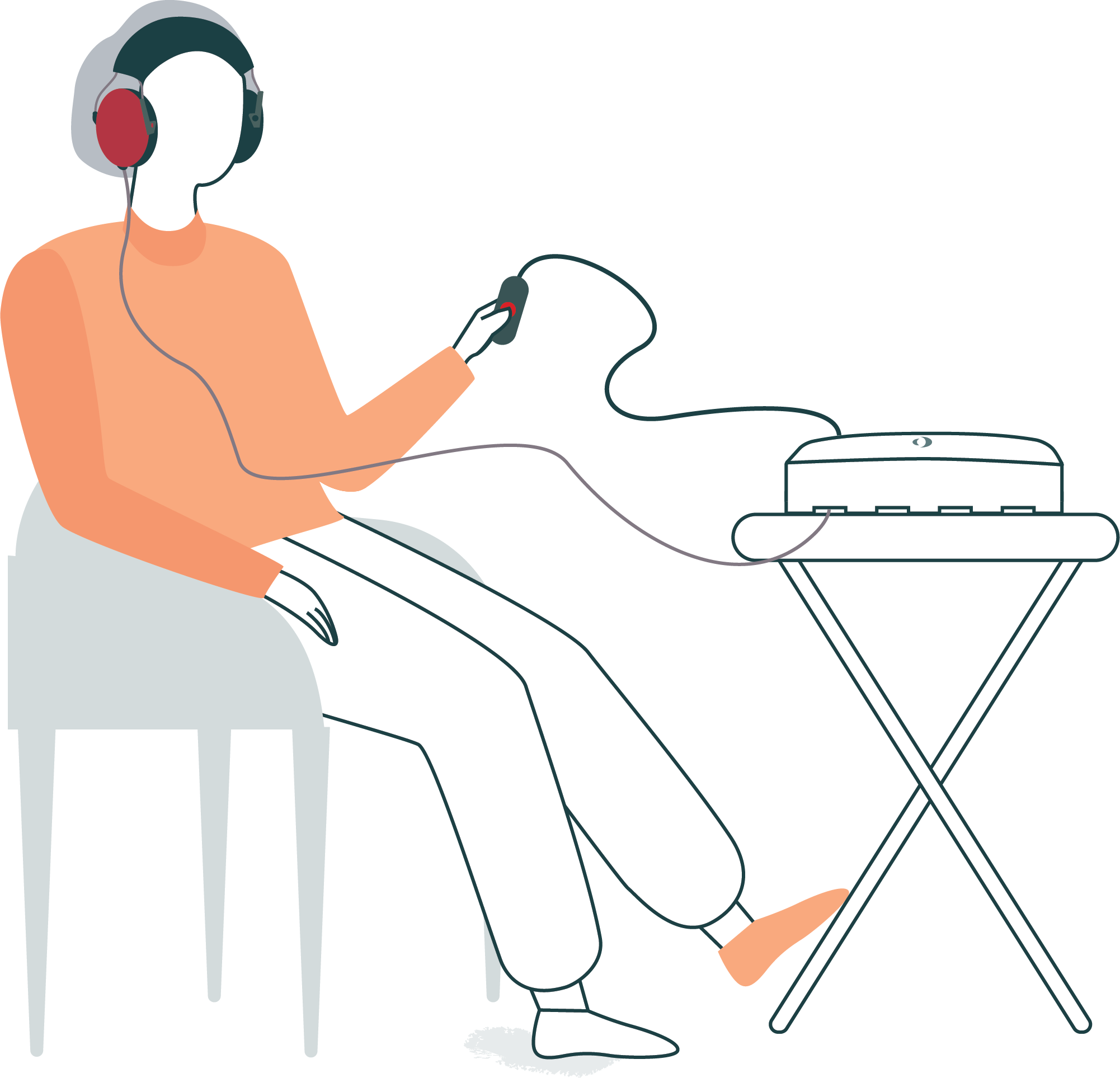
When a clinician is performing Pure-Tone Audiometry, the patient can expect to be placed in a soundproof room. The provider will place a transducer such as headphones, insert earphones, and/or a bone conduction headphone on the patient and will present a series of beeps or tones. The patient will be instructed to respond to these tones in a developmentally appropriate way.
Step 2
**Choosing Your Transducer**
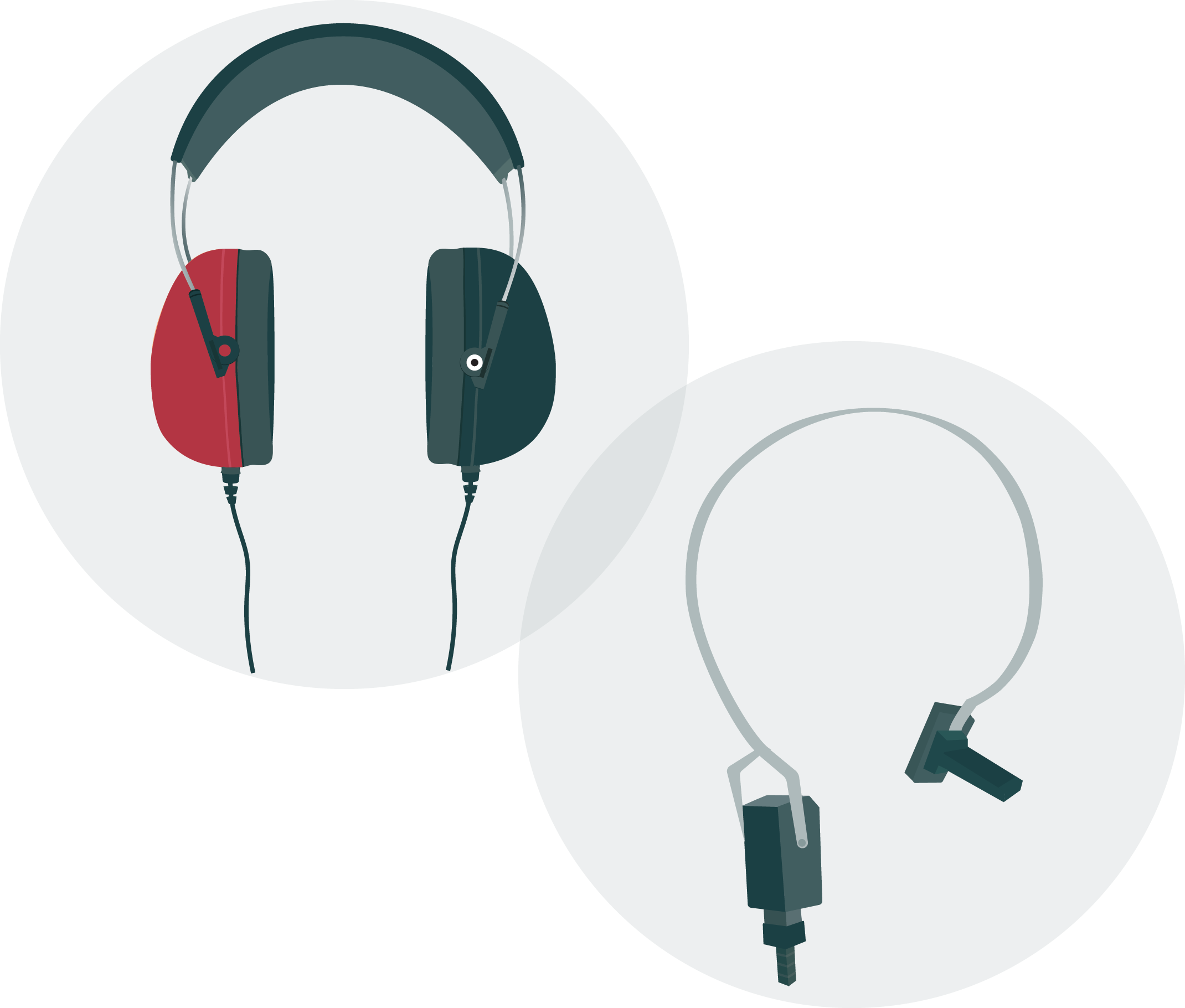
Headphones and insert earphones are transducers used to test air conduction (AC) hearing levels or thresholds. When hearing through air conduction, just as the name states, sound waves travel through the air into the outer ear, through the middle ear, and finally to the inner ear which then transmits sound to the brain where it is processed and understood. As each section of the ear is used to respond to stimuli in this method of sound transmission, the entire hearing system can be analyzed. This is a good way to obtain results on how an individual is hearing in their daily life.
A bone oscillator is a transducer used to test bone conduction (BC). Through vibration of the skull, particularly of the mastoid bone, sound waves can be detected by the inner ear directly. When hearing through bone conduction, the outer and middle ear are bypassed.
Step 3
**Presenting Stimuli**
It is through these transducers that a clinician will present pure tones ranging in frequency, often from 250 – 8000 Hz. Usually beginning with 1000 Hz, providers will make their way across the frequency range. Tones will be presented at softer volumes first and amplitude will be increased until a patient response is obtained. At this point, the clinician will perform a threshold search to hone in on the precise decibel level needed for an individual to detect the frequency in question.

Step 4
**Plotting Responses and Interpreting Results**
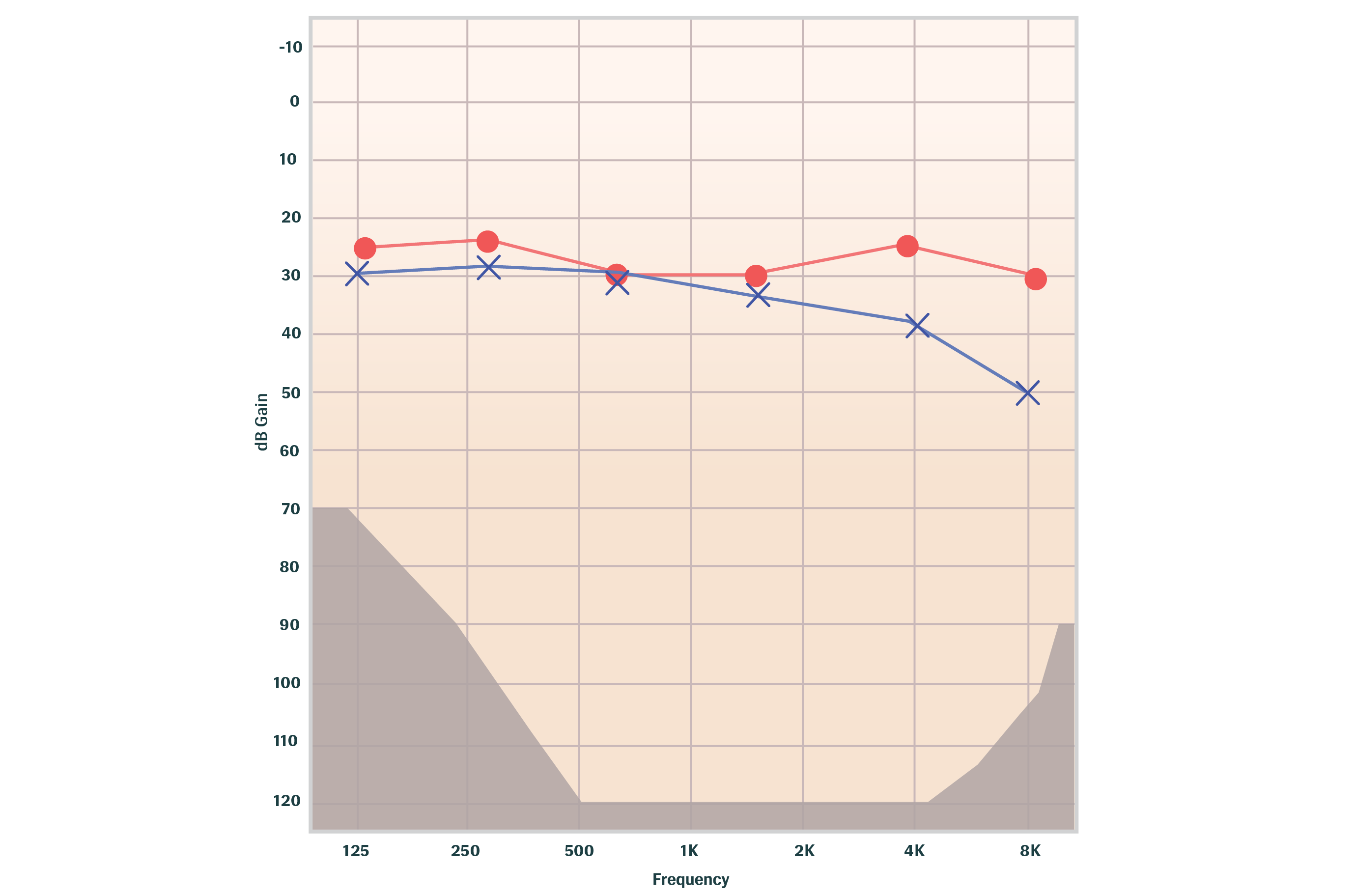
The patient’s responses to those sounds will be plotted on a graph containing information on volume or amplitude and frequency or pitch. These results will then be interpreted by the clinician and will guide their decisions regarding the patient’s treatment journey.
equipment
## **Elevate Your Pure Tone Audiometry with Our Specialized Software**
Streamline your Pure Tone Audiometry tests and elevate patient care with our intuitive and configurable software. Designed for efficiency and flexibility, our platform fits any clinic's needs and budget.

**Frequently Asked Questions**
## What Information Do You Learn From Pure-Tone Audiometry?
**Severity**
When performing Pure-Tone Audiometry, the severity of the hearing loss is often the first information obtained by the audiologist. As mentioned above, pure tones are presented through air conduction at different frequencies when using headphones or insert earphones. Audiologists often start at a softer volume and work their way up in amplitude until a patient responds. These responses are then plotted on a graph in decibels by frequency. The decibel level that a patient responded to >50% of the time at each frequency represents the severity of loss. For example, if an individual responds to sound presented at 55 dB HL for 500 Hz tones, that would mean they have a moderate hearing loss at that frequency.
**Nature**
Air conduction testing, however, does not provide complete information on the nature or etiology of hearing loss. To obtain these results, audiologists must take advantage of another method of hearing – bone conduction. When testing bone conduction, a bone oscillator is placed on the mastoid process. The bone oscillator then vibrates to send stimuli, pure tones, to the inner ear. When stimulating the inner ear directly, the outer and middle ear are bypassed. This allows audiologists to discern if hearing in the inner ear differs from hearing through the outer and middle ears. If there is a discrepancy between bone and air conduction thresholds, a provider can determine that there is some pathology involving the outer and/or middle ear contributing to the hearing loss.
**There are 3 classifications of hearing loss; conductive, sensorineural, and mixed.** When bone conduction thresholds are normal and there is a discrepancy between air and bone conduction thresholds by more than 10 dB, this is classified as a conductive hearing loss. With this type of loss, the inner ear is healthy and hearing normally, but there is some pathology in the outer and/or middle ear affecting the transmission of sound. When there is diminished hearing through both bone and air conduction, and there is no difference between the thresholds, this is classified as a sensorineural hearing loss. With this type of loss, there is diminished hearing ability in the inner ear alone. With a mixed hearing loss, all parts of the ear contribute to the overall loss. Results of a mixed loss would present as diminished bone conduction thresholds, representing a loss in the inner ear, as well as diminished air conduction thresholds. There would also be a difference in air and bone scores. In other words, an individual with a mixed hearing loss has an underlying inner ear issue causing diminished hearing acuity as well as an outer and/or middle ear pathology causing a further decline in hearing thresholds.
**Ear Specific Information**
At times, hearing loss will differ between ears. Headphones and insert earphones are used to provide audiologists with ear specific results. When testing [bone conduction](https://www.auditdata.com/audiology-solutions/measure/hearing-assessment/bone-conduction/ "Bone Conduction"), however, no matter which mastoid the oscillator is placed, the entire skull is vibrating. When there is a difference between each ear’s hearing acuity, this phenomenon makes it difficult to tell which ear is responding. Amplitude can also make it difficult to separate each ears results even when testing through headphones or insert earphones. If a sound is loud enough, it can stimulate the non-test ear despite it being presented to the other side. In these two scenarios, masking is used to isolate each ear and obtain results for each. In short, masking is a method of ensuring the ear you are not presently testing, the non-test ear, is not responding to the presented stimuli. You can then determine the severity of loss in each ear individually.
**Most Comfortable Loudness Levels (MCL) and Uncomfortable Loudness Levels (UCL)**
Beyond hearing acuity, pure tones can be used to **determine at what decibel level a patient is most comfortable listening to and understanding sound**. Audiologists can present tones at different levels and frequencies and use patient report to determine at what level each pitch is most comfortable. Similarly, uncomfortable loudness levels can be determined by presenting pure tones at each pitch at increasing amplitude levels.
## What is an Audiogram?
The audiogram is the graph in which the clinical plots hearing levels. Hearing levels describe the deviation from what is considered normal hearing. The audiogram contains frequency information on the x-axis, listed from low to high pitch, and amplitude or volume on the y-axis, measured in decibels (dB HL). Responses to pure tones, usually ranging from 250 – 8000 Hz, are indicated on this graph. Data is recorded using a variety of standardized symbols that are delineated by ear, transducer, and masking status. Once testing is complete, the audiogram contains data regarding the severity, classification, and configuration, or shape, of the hearing loss.
## How Long Does the Test Take?
The test typically takes about 20-30 minutes to complete but may vary depending on the individual's responsiveness.
## What Equipment is Necessary?
The most important piece of equipment needed to perform pure tone audiometry is your [audiometer](https://www.auditdata.com/audiology-solutions/measure/diagnostic-audiometer-fitting-unit/ "Diagnostic Hearing Assessment & Fitting Unit"). This device will allow you to present tones at the desired volume and frequency. Clinicians will also need transducers, primarily headphones, but possibly also a bone oscillator. In addition, some professionals prefer insert earphones. Ideally, pure-tone audiometry should be performed in a soundproof booth to ensure accurate results.
Most audiometers, like [Measure's diagnostic audiometer and fitting unit](https://www.auditdata.com/audiology-solutions/measure/diagnostic-audiometer-fitting-unit/ "Diagnostic Hearing Assessment & Fitting Unit"), also allow for [free-field testing](https://www.auditdata.com/audiology-solutions/measure/hearing-assessment/free-field/ "Free Field") using a speaker as transducer. This test is ideally done in a soundproof booth. It should be noted that when testing with free-field sound, no conclusions can be drawn regarding which ear that is responding, as ear-specific information cannot be obained through these means.
Clinicians can utilize the [Measure software](https://www.auditdata.com/audiology-solutions/measure/software/ "Software") and audiometers to accurately perform pure tone audiometry testing. As the results of this type of testing guide a clinician’s treatment and management of an individual’s hearing loss, having high-quality and reliable equipment is paramount.
Measure E-learning
**Welcome to Our E-Learning Course on Pure Tone Audiometry in the Measure Software**
We are delighted to present this comprehensive e-learning course aimed at providing an in-depth understanding of Pure Tone Audiometry and its functionalities within Measure software. Whether you're a seasoned audiologist looking to refresh your knowledge or a beginner eager to grasp the essentials, this course has something valuable for you.
