# Real Ear Measurement (REM) in Hearing Aid Fitting | Auditdata
> Discover how real ear measurement (REM) works in hearing aid fitting, what equipment is needed, and why REM audiology ensures precise, comfortable results.
# What is a **Real Ear Measurement** (REM)
Real Ear Measurement (REM) is an objective hearing aid verification test that measures the sound pressure level in a patient’s ear canal while the hearing aid is worn. Real ear testing is used to assess hearing aid function in the ear canal and to check that amplification meets prescribed targets, so the hearing aid provides clear, comfortable sound.
## Pair the Wireless REM Probe with Our **Audiometer & Fitting Unit**
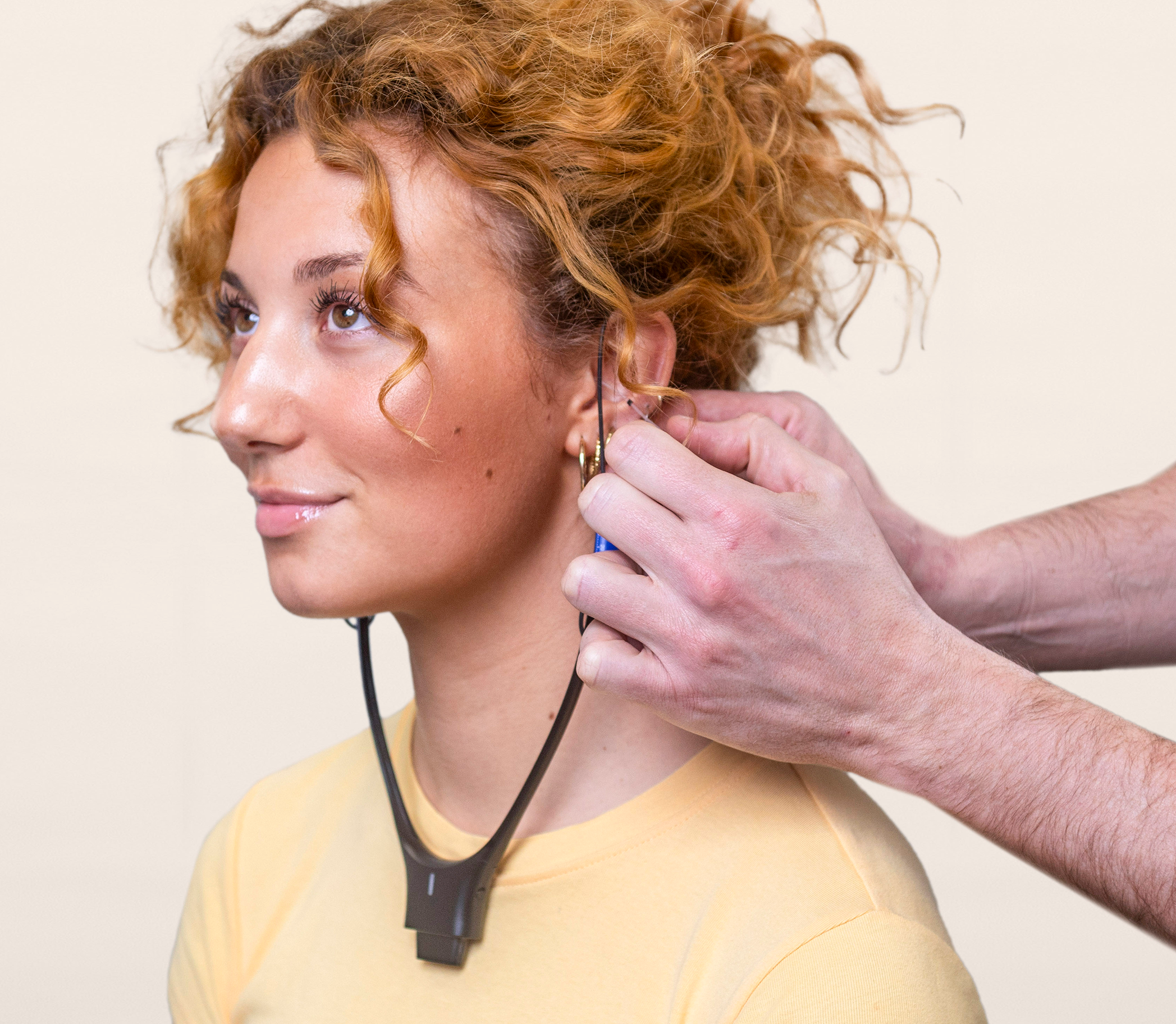
Our sleek and stackable [audiometer and fitting unit](https://www.auditdata.com/audiology-solutions/measure/diagnostic-audiometer-fitting-unit/ "Diagnostic Audiometer & Fitting Unit") seamlessly integrates into any clinic decor, optimizing space while maintaining a modern aesthetic. With advanced features like portability and precise diagnostic capabilities, our audiometer revolutionizes testing and increases efficiency and accuracy.
rem
## **Why Perform Real Ear Measurements** for Hearing Aid Fittings?
The REM test increase customer satisfaction and clinic efficiency by taking the guesswork out of hearing aid fittings. Providing each individual client optimal gain and frequency response when programming new hearing aids ensures a more comfortable listening experience, improved speech quality, and overall intelligibility.
## Reduce the number of return visits
By fitting the hearing aids properly, the first time, customers will need less fine-tuning down the road, which means fewer return visits, follow-up appointments, and troubleshooting. This boosts efficiency and improves bottom lines.
## Increase customer satisfaction
Real ear testing delivers true customer satisfaction, which enhances a practice’s reputation while reducing the time and expenses associated with multiple return visits and returns. Increased customer satisfaction leads to patient loyalty and an increase in the number of referrals.
## Reduce hearing aid return rate
All available evidence shows that customers are happier with their hearing aids – and their audiology providers – when they’re fitted using real ear testing. Satisfied customers mean fewer hearing aid returns, which translates to more profitable businesses.
## Increase customer referrals
Happy and satisfied customers are more likely to recommend friends and family to a business. Leads from customer referrals are usually high quality and often have an increased purchase intent.
## Individualized Hearing Aid Fit
Lifestyle, hearing loss severity, and ear anatomy all influence how a hearing aid should be fit. Because each ear is unique, small differences in canal shape affect acoustics—making real ear measurement critical for accurate hearing aid fittings.
## Verify Hearing Aid Performance
Hearing aids are programmed through software that amplifies sound in different ways depending on the audiogram. Once programmed, however, the fit or sound may still not be perfect. This is where a real ear measurement comes into play. Once the audiologist has REM data, they can then adjust the hearing aids to ensure that that individual is getting the correct amount of sound.
## Save Clinic Time
Without a real ear measurement, fitting hearing aids properly can be a frustrating process of trial and error. An audiologist can adjust the fit to the hearing aid software’s recommendations, and the patient may still return several times for adjustments. By performing real ear measurements, you are reducing the likelihood of extensive follow-up visits, which take up precious clinic time.
Download Free Guide
## **Everything You Need to Know About Real Ear Measurements**
This guide will explain why REM is crucial in modern audiology and dispel the misconceptions that may cause hearing care professionals to avoid this test. We will also discuss the process for real ear measures, the benefits of this approach, and ideas to use REM in your hearing clinics to set your business apart.
### **How to Perform Real Ear Measurements**
Step 1
### **Prepare the Patient**
- Perform an otoscopy to check for any contraindications like ear wax, perforated ear drum, or discharge. Place the patient in front of the REM speaker at a distance of 80 to 100 cm.
- Calibrate the REM probe tubes by holding the REM headset in front of the speaker and running the calibration in the Measure software. Anomalies in the probe tube frequency response may indicate a blocked or broken probe tube.
- Insert the probe tube into the ear canal of the patient. Typically, the insertion depth is between 28 and 30 mm. The Measure REM probe tube has an adjustable marker that helps you place the tube optimally.

Step 2
### **Ensure a Proper Probe Tube Placement**
First measure the Real Ear Unaided Gain (REUG). This measurement helps you verify the position of the probe tube. The curve has a peak around 3-4 kHz and should not fall below -5 dB around 6 kHz. If it does, reposition the probe tube.

Step 3
### **Check for Sound Leakage**
Turn the hearing aid off and place the hearing aid mold or dome in the patient’s ear. Make sure not to change the probe tube placement while doing this. Measure the Real Ear Occluded Gain (REOG). This measurement helps you decide whether to choose an open or closed fit in the Primus software.

Step 4
### **Measure REAR and Adjust the Hearing Aid**
Activate the hearing aid, choose a target amplification (e.g. NAL-NL2 or DSL), and measure the Real Ear Aided Response (REAR). This measures the SPL level in the ear canal with hearing aid output.

Step 5
### **Choose a Target Amplification**
Use the hearing aid fitting software to adjust your hearing aid amplification to fit your target. Don’t worry: Measure will warn you if you are too far off target.

## **Elevate REM with Our Specialized Software**
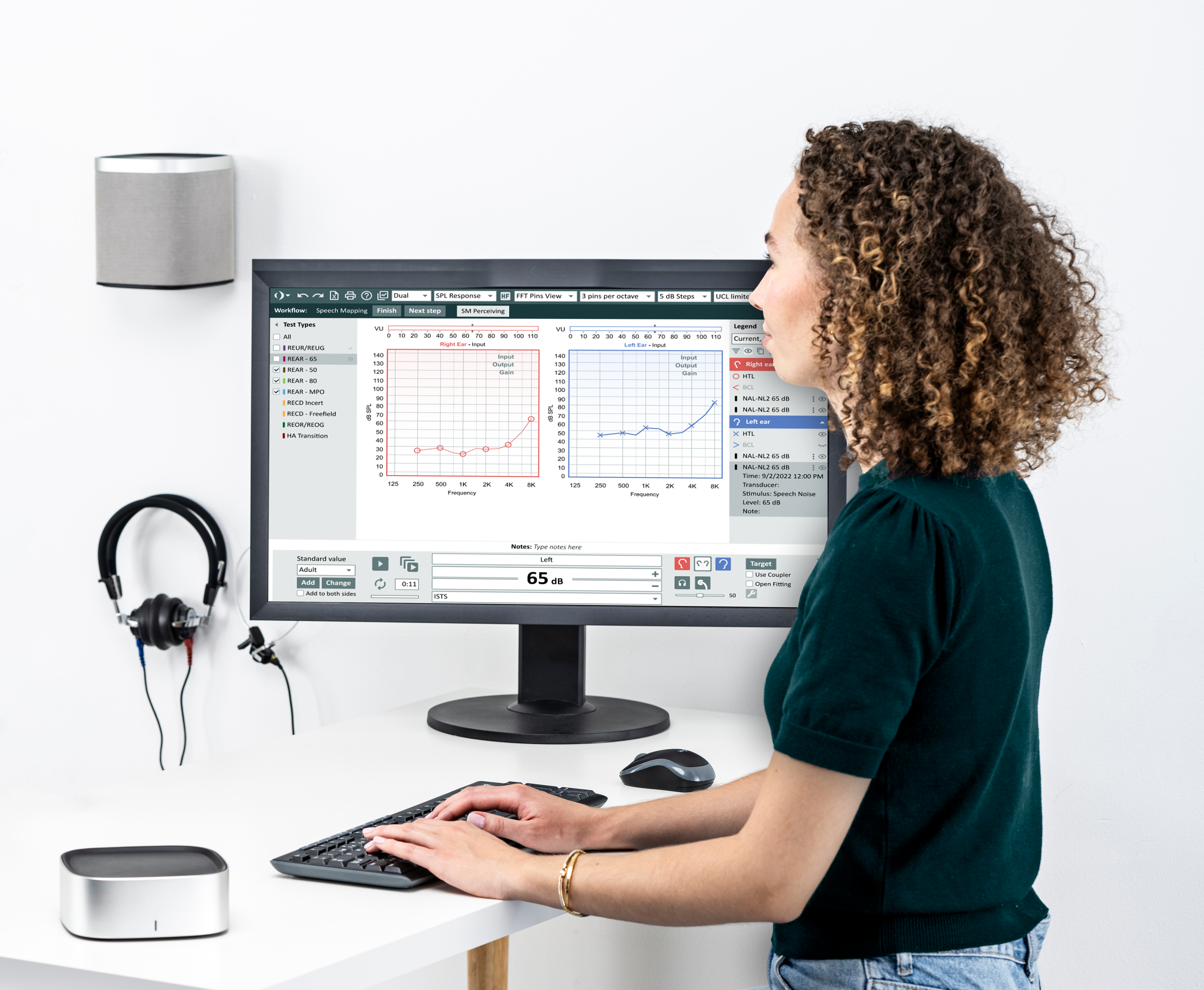
Use The Measure Software for more REM fitting. Designed for efficiency and flexibility, our platform fits any clinic's needs and budget.
## **Frequently Asked Questions**
## What is real ear measurment?
Real Ear Measurement (REM) is an objective hearing aid verification test that measures the sound pressure level in a patient’s ear canal while the hearing aid is worn.
## What are the contraindications for Real Ear Measurements?
While real ear measurements provide valuable information on a hearing aid’s output, there are instances where real ear testing isn’t appropriate.
- **Pain in the ear canal**As a small tube is inserted into the ear canal during testing, pre-existing pain in the ear should be considered.
- **Wax or discharge**A significant amount of wax can not only affect the validity of your results, but it can also clog the probe tube. Should this occur, no response would be noted even with the hearing aid turned on. Discharge due to active infection can lead to the same problems.
- **Eardrum Perforations**While the presence of an ear drum perforation doesn’t completely preclude real ear testing, it should be considered. With a large perforation, results may be affected by the open middle ear space. Additionally, with any size perforation, probe tube placement should be performed carefully so as not to insert the probe through the perforation itself.
## What to expect during real ear testing?
During this test, an audiologist places a small tube into the entrance of the ear canal. This tube measures the sound going into the ear. They will then place the hearing aid in and play stimuli from a speaker – that may be tones or speech. The output from the hearing aid will be measured in the ear. This measurement will then be compared to validated “targets.” These targets are based on the individual’s hearing loss and indicate the appropriate output of the hearing aid at each frequency that is presented.
## What equipment is needed to perform REM?
With the appropriate real ear measurement equipment, a clinician can complete a REM test quickly and accurately. To perform real ear testing, you will need:
- An **existing audiogram** to compare hearing aid fitting targets
- An [**otoscope**](https://www.auditdata.com/audiology-solutions/measure/hearing-assessment/otoscopy/video-otoscope/ "Video otoscope") to check for wax and/or debris
- A high-quality **loudspeaker** for presenting stimuli
- **An[audiometer and fitting unit](https://www.auditdata.com/audiology-solutions/measure/diagnostic-audiometer-fitting-unit/ "Diagnostic Audiometer & Fitting Unit")**
- **REM software**/test box
- **Probe tubes**
- **Reference microphones**
## What kind of measurements can I perform with the Measure REM?
With Measure's REM, you can conduct all essential REM measurements, which include REUG/REUR, REOG/REOR, REAG/REAR, REIG, and [RECD](https://www.auditdata.com/audiology-solutions/measure/hearing-instrument-fitting/real-ear-measurement/recd-fitting/ "RECD Fitting").
## Are there specific test signals that Measure REM supports?
Yes, you can utilize Measure REM with several input signals, including ISTS, ICRA noise, and many other signals.
## Which prescriptive formulas can I apply with Measure REM?
Measure's REM module supports a range of prescriptive formulas such as DSL v5, NAL-NL1, NAL-NL2, and it also allows for manual target input to tailor evaluations for individual needs.
## How does the binaural capability of the REM module benefit me?
The binaural REM capabilities ensure more accurate and simultaneous measurements for both ears. This streamlines the hearing aid fitting process, making it quicker and more efficient.
## Can I customize the evaluation using the REM module?
Yes, with the manual target input feature, you can individualize evaluations based on specific needs and preferences.
## Should I insist on real ear measurment?
Yes! Real ear measurement is a gold standard in the industry, and it helps accurately fir the hearing aids to the patient.
## How can multi-location clinics standardize real ear measurement testing?
Multi-location hearing care networks often want every clinic to follow the same real ear measurement (REM) protocols and documentation standards. Many organizations use connected REM equipment like Auditdata Measure alongside [**audiology practice management software for multi-location clinics**](https://www.auditdata.com/ "Auditdata.com") to standardize workflows, store results consistently, and monitor quality across sites.
Measure E-learning
## **Welcome to Our E-Learning Course on Real Ear Measurement in the Measure Software**
We are delighted to present this comprehensive e-learning course aimed at providing an in-depth understanding of Real Ear Measurements within Measure, including why and how to perform REM, troubleshooting and more.

## **Learn More** About Real Ear Measurements
## Are Real Ear Measurements Necessary?
Real Ear Measurements (REM) – also called Probe Microphone Measurements (PMM) – are considered the gold standard in hearing aid fitting and verification, allowing audiologists to determine whether a hearing aid user is receiving the precise level of amplification needed at every frequency to maximize their hearing. This blog explains how REM can improve customers’ hearing, as well as drive better business outcomes and serve as a key differentiator for hearing clinics.

## Assess OTC Hearing Devices with REM, Speech-in-Noise Testing, and Functional Gain
Demonstrating the performance of OTC hearing devices to patients can be challenging, but providing quantitative data can be helpful. REM, speech-in-noise testing, and functional gain testing can help educate patients on the appropriate use of OTC devices.

## Do OTC and DTC hearing aid options mean trouble for audiology retailers?
Over-the-counter (OTC) and direct-to-consumer (DTC) options are set to disrupt the hearing care industry. Is your clinic ready for the challenges to come?
