# IN1 Audiometric Insert Earphone — Auto-Recognition, Ultra-Low Distortion | Auditdata
> The IN1 is a certified audiometric insert earphone with built-in memory chip for automatic audiometer recognition. <2% THD. IEC 60645-1. Validated by Audiometrix. Part No. 100.067
Auditdata Measure · NEW TRANSDUCER LINE · 2026
# **Autometric Insert Earphone**
Classified as a Class 2a Medical Device · IEC 60645-1 · ANSI S3.6 · ISO 389-2:1994
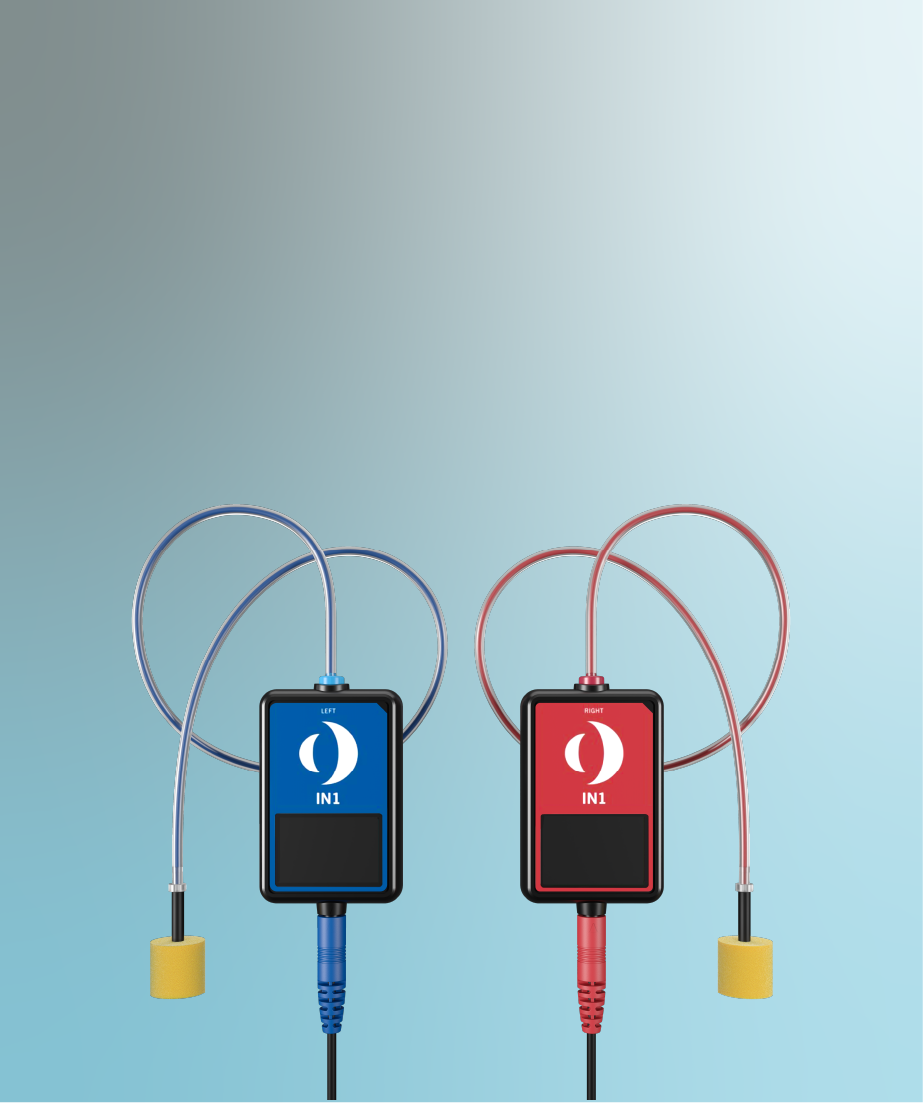
The Auditdata IN1 is a certified audiometric insert earphone for hearing loss diagnostic testing, covering 125 to 8,000 Hz with a sensitivity of 103 dB SPL at 1 kHz and Total Harmonic Distortion of less than 2% across the working range (maximum 2.5% at 110 dB HL). The IN1 includes a built-in memory chip in the Mini-DIN connector that enables automatic transducer recognition by compatible audiometers.

## 125 Hz – 8kHz
FREQUENCY RANGE
## 103 dB SPL
Sensitivity @ 1kHz
## Built-in Memory Chip for Auto-Recognition
The IN1 Mini-DIN version includes an embedded memory chip that enables the audiometer to automatically recognise and configure the transducer, eliminating manual setup steps and reducing the risk of incorrect calibration being applied.
## Ultra-low Distortion to 120 dB HL
Less than 2% total harmonic distortion across the full working range, with a maximum of 2.5% at 110 dB HL, exceptional signal purity that ensures the audiogram reflects the patient, not the transducer.
## Flexible Placement for Patient Comfort
The included fastener kit (2 clips and a Velcro strap) allows the transducer body to be worn on the arm or around the neck, accommodating diverse patient needs and keeping the test environment comfortable and distraction-free.
Best Care Experience
## **Every Patient Deserves a Test They Can Trust**
Insert earphones are the transducer of choice when sound field attenuation, interaural isolation, and patient comfort matter most. The IN1 delivers on all three, while adding smart connectivity that makes the clinician's workflow faster and more reliable.
From paediatric testing to adult assessments, the IN1's flexibility and precision help clinicians spend less time on setup and more time delivering great care.
- **Smart transducer recognition.** The built-in memory chip means the audiometer always knows which transducer is connected, no manual selection, no miscalibration risk.
- **Superior interaural attenuation.** Insert earphones provide greater ear canal isolation than supra-aural or circum-aural headphones, reducing the need for masking in many test scenarios.
- **Comfortable for every patient**. Lightweight and flexible placement options make the IN1 suitable for extended test sessions and diverse patient populations.
Austrian based audiology experts Audiometrix evaluated the Real Ear transducers under simulated real-clinic conditions using professional audiometric calibration procedures and equipment. The transducers demonstrated stable and consistent performance aligned with clinical and industry expectations.
Audiometrix
Austrian Audiology Experts
WHAT WE CLAIM
## **Every Claim, Backed By Data**
The IN1 is built to perform to specification, here's exactly what that means.
**High-quality audio performance** specifically designed for hearing loss testing — not a consumer earphone adapted for clinical use.
**Output Sound Level Precision of ±3 dB** across the full −10 to 120 dB HL range — verified at time of manufacturing.
**Less than 2% THD** across the full working range, with a maximum of 2.5% at 110 dB HL — among the lowest distortion figures in its class.
**Sensitivity of 103 dB SPL at 1 kHz, 1 mW (2cc)** — high sensitivity enabling precise output control across the full audiometric range.
**Embedded memory chip (Mini-DIN)** for automatic audiometer recognition — eliminating manual transducer selection and miscalibration risk.
**Fastener kit included** — 2 clips and a Velcro strap for arm or neck placement, supporting patient comfort in any test scenario.
**Biocompatible per ISO 10993-1** — lead, nickel, and latex free; RoHS compatible. Safe for direct patient contact.
**Cable available as spare part** for repair and refurbishment — extending product lifespan and reducing total cost of ownership.
Technical Datasheet
## **IN1 Product Specifications**
**Related Standards:**IEC-60645-1:2017, ANSI S3.6:2018 (R2023), ISO 389-2:1994
**Frequency Range CA1:**125 Hz – 8,000 Hz
**Output Level Range:** −10 – 120 dB HL
**Output Level Precision\*:** ±3 dB
**Sensitivity\*:** 103 dB SPL @ 1kHz, 1mW, 2cc
**Distortion\*:**<2%, max 2.5% at 110 dB HL
**Nominal Impedance:** 10 Ω (±15%)
\*At time of manufacturing · Copyright © Auditdata A/S. 2026/03
## **Ready to Bring the New IN1 into Your Clinic?** Get in Touch
Whether you're switching from another insert earphone or adding insert testing to your workflow for the first time, our team will help you configure the right solution for you.
**Frequently Asked Questions**
## How the IN1 memory chip works?
The IN1's Mini-DIN connector contains an embedded memory chip that communicates with compatible audiometers, including the Auditdata Measure 2000-1 to automatically identify the transducer type. This eliminates the need for manual transducer selection in software, reducing the risk of configuration errors and miscalibration during clinical testing.
## Why insert earphones are used in audiometry?
Insert earphones are placed inside the ear canal rather than over or on the ear. This positioning provides several clinical advantages: higher inter-aural attenuation (reducing masking requirements), better ear canal collapse prevention compared to supra-aural headphones, greater patient comfort during extended tests, and reduced ambient noise interference. The IN1 is supplied with a fastener kit (two clips and a Velcro strap) enabling arm or neck placement for patient flexibility.
## What is an audiometric insert earphone?
An audiometric insert earphone is a transducer placed inside the ear canal for clinical hearing threshold testing. Compared to supra-aural (on-ear) headphones, insert earphones provide higher inter-aural attenuation, better resistance to ear canal collapse, and improved patient comfort, especially in paediatric testing and extended diagnostic sessions.
## What does the memory chip in the IN1 do?
The IN1's Mini-DIN connector contains a built-in memory chip. When connected to a compatible audiometer such as the Auditdata Measure 2000-1, the audiometer automatically identifies the IN1 as the active transducer, removing the need to manually select it in software and eliminating the risk of using incorrect calibration data.
## What is the distortion level of the IN1?
The IN1 has Total Harmonic Distortion (THD) of less than 2% across the full working frequency range, with a maximum of 2.5% at 110 dB HL, among the lowest distortion figures in the audiometric insert earphone category. This level of signal purity ensures audiograms reflect actual patient thresholds rather than transducer artefacts.
## What connector does the IN1 use?
The IN1 (Part No. 100.067) uses an 8-pin Mini-DIN connector with an embedded memory chip. It is also available with DIN and Mono Jack connectors for compatibility with audiometers not supporting Mini-DIN.
## Is the IN1 suitable for paediatric audiometry?
Yes. The IN1's insert earphone format provides better inter-aural attenuation and is generally preferred for paediatric testing because it reduces ear canal collapse risk. The included fastener kit (clips and Velcro strap) helps manage the cable during testing with young patients.